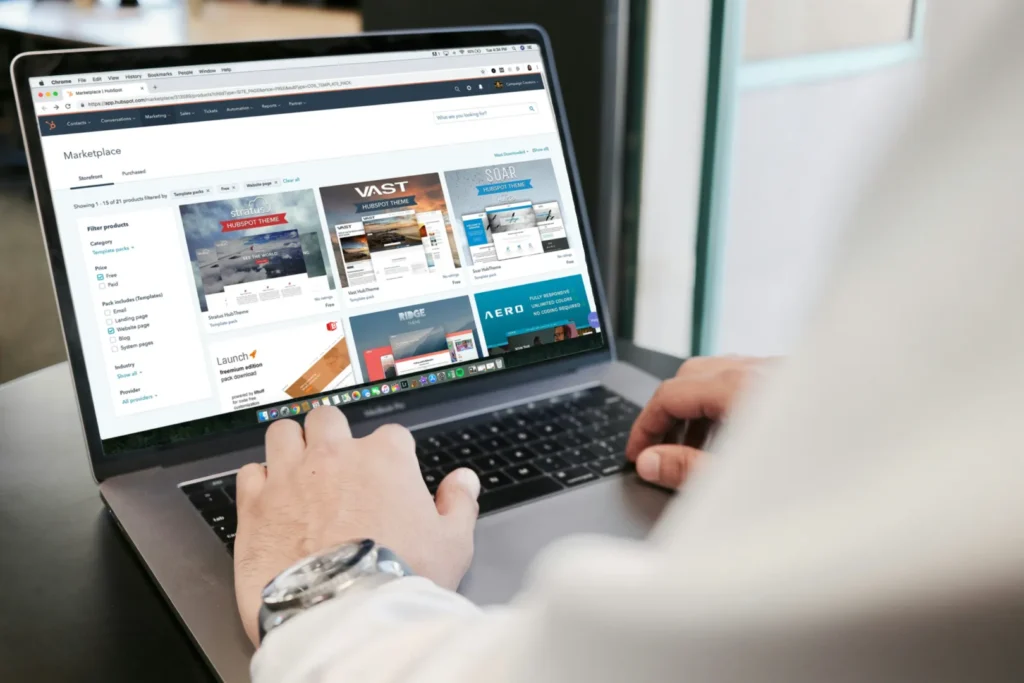
Learn how talking websites and conversational UX lever product discovery by guiding users, clarifying options, reducing confusion, and helping customers find the right products faster—driving higher engagement and conversions.
Most websites overwhelm visitors with choices instead of helping them discover the right product. Endless menus, filters, and category pages assume users already know what they’re looking for—when in reality, most don’t. As digital experiences become more complex and attention spans shorter, conversational UX is redefining how customers discover products online.
The Product Discovery Problem on Traditional Websites
Traditional websites are designed around navigation, not understanding.
They rely heavily on:
- Product categories and subcategories
- Keyword-based search bars
- Filters that assume technical knowledge
But real users arrive with vague goals:
- “I need something affordable but reliable.”
- “I’m not sure which option fits me best.”
- “What’s the difference between these products?”
This leads to:
Choice overload
Too many options create confusion instead of clarity.
Random exploration
Users click around hoping to stumble on the right product.
High abandonment
Friction increases drop-offs before decisions happen.
Talking websites solve this by guiding instead of listing.
How Humans Naturally Discover Products?
Offline, discovery is conversational.
In physical stores people ask:
- “Which one is best for beginners?”
- “What’s popular right now?”
- “I want something easy to use.”
Sales staff ask follow-ups to understand needs before recommending.
Talking websites recreate this experience digitally.
Instead of browsing blindly, users simply explain their goal—and the website responds intelligently.
Turning ‘Needs’ Into Smart ‘Recommendations‘
A talking website starts by understanding:
- Purpose and use case
- Budget sensitivity
- Experience level
- Urgency
- Preferences
Example flow:
“What are you trying to achieve today?”
“Is this for personal or business use?”
“Do you prefer budget-friendly or premium options?”
Based on answers, the system narrows choices to the most relevant options.
This mirrors human recommendation logic rather than algorithmic guessing.
Simplifying Large Product Catalogues
For businesses with dozens or thousands of products, traditional UX struggles.
Talking websites:
- Remove endless scrolling
- Eliminate complex filter combinations
- Surface best-fit options immediately
Instead of browsing hundreds of products, users see a short, relevant shortlist.
This dramatically improves discovery speed and satisfaction.
Helping Users Who Do Not Know What to Search
Search bars depend on exact words.
But users often describe problems, not product names:
“I need something to manage remote employees.”
“I’m looking for a gift for a fitness lover.”
Talking websites interpret intent rather than keywords—making discovery intuitive for non-experts.
Educating Users During Discovery
Discovery is also about understanding.
Talking websites explain:
- Differences between options
- Use cases
- Benefits and limitations
Example:
“Product A is easier for beginners, while Product B offers advanced customization.”
This builds confidence and reduces hesitation.
Personalized Discovery Experiences
Each user follows a unique conversational path.
Talking websites adapt in real time based on responses.
Two visitors on the same page can receive completely different recommendations—based on goals, budget, and preferences.
This level of personalization is nearly impossible with static navigation alone.
Learning From Discovery Conversations
Every interaction generates insights:
- What users search for most
- Common confusion points
- Feature priorities
Businesses can use this data to:
- Improve product positioning
- Optimize categories
- Create better content
- Refine marketing messages
Discovery becomes a continuous improvement loop.
Industry Use Cases
E-commerce
Customers find products faster without scrolling endlessly.
SaaS
Prospects identify the right plan or feature set without confusion.
Education
Students discover courses aligned with goals and skill levels.
Services
Clients find suitable packages based on needs and urgency.
Across industries, conversations replace complexity.
Reducing Returns and Buyer Regret
Poor discovery leads to wrong choices.
Talking websites ensure better product-user fit by:
- Clarifying needs early
- Setting expectations clearly
- Matching users accurately
This reduces returns, cancellations, and dissatisfaction.
Optimized for Mobile-First Users
It is now the age of Mobile-First Users, but mobile navigation is frustrating in traditional websites. Talking Websites are Perfect for today’s mobile-first users, because they simplify discovery through:
- Voice input
- Short conversational steps
- Minimal typing
Faster Paths to Purchase
When users find what they need quickly:
- Confidence increases
- Friction decreases
- Conversions rise
Talking websites shorten the journey from interest to action.
Complementing Existing Website Design
Conversational UX does not replace traditional navigation—it enhances it.
Users can still browse normally or ask for help when needed.
This creates a flexible, user-first experience.
Measuring Discovery Success
Key indicators include:
- Time to product selection
- Conversation engagement rate
- Conversion after interaction
- Reduced bounce rate
- Lower return rates
These show real impact on business outcomes.
Product Discovery as a Competitive Advantage
In a world of endless options, clarity wins.
Customers don’t want more products—they want the right product.
Talking websites make discovery effortless, personalized, and human.
CONCLUSION
Traditional websites force customers to search, filter, and guess their way to the right product. Talking websites guide them there. By turning product discovery into a natural conversation, businesses help users clarify needs, explore relevant options, learn confidently, and decide faster. In an increasingly crowded digital marketplace, success belongs to brands that simplify discovery—not complicate it. Conversational UX transforms websites from static catalogues into intelligent guides—and that transformation is shaping the future of how customers find what they need online.